The Three Legitimate Paths
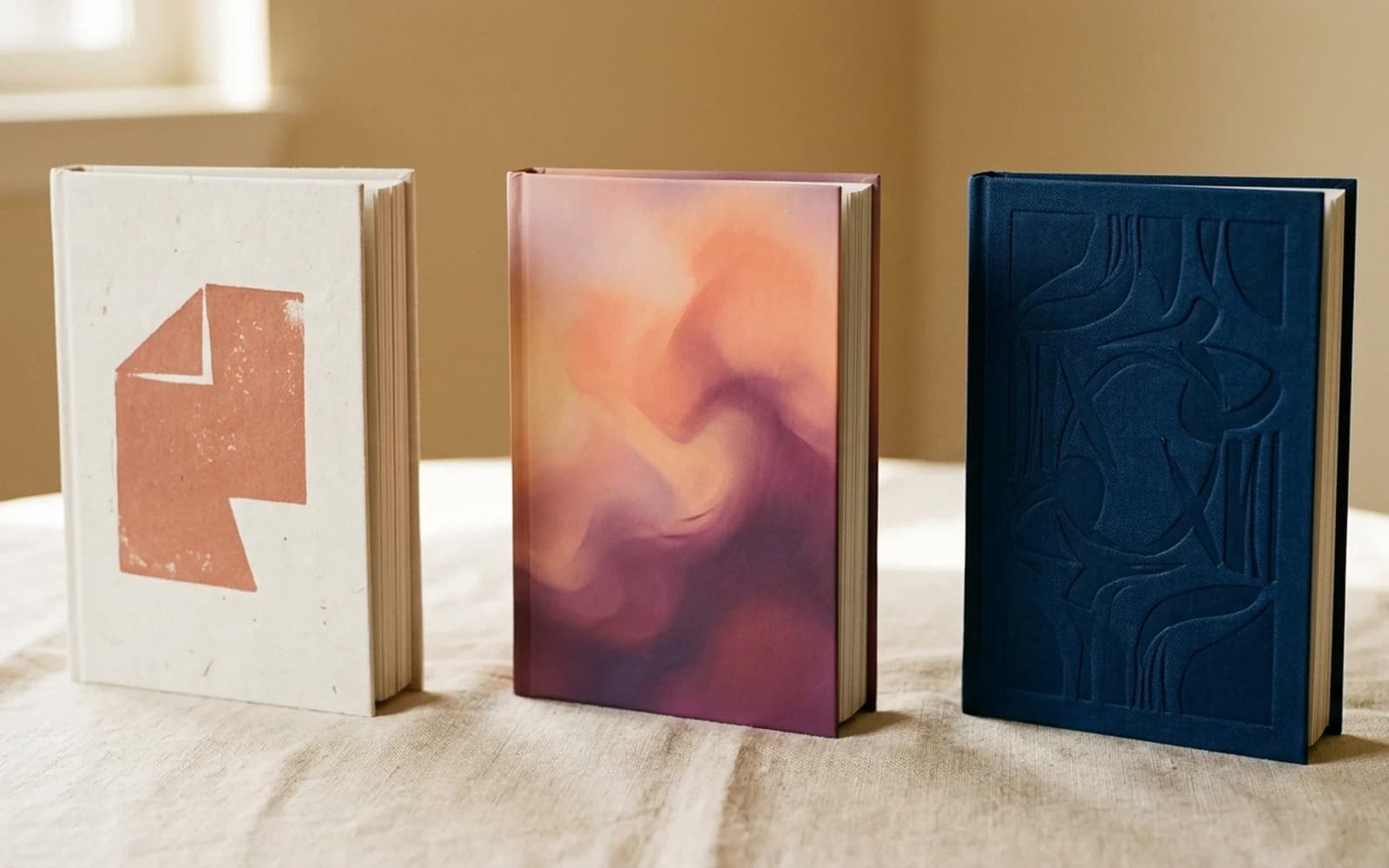
The DIY vs pro debate in 2026 is a false binary. AI has reshaped the middle of the market and there are now three honest options. Each is the right answer for a specific book in a specific situation. Anyone who tells you only one is "the right way" is selling you their lane.
Design tools
Canva, Affinity Designer, Photoshop, GIMP. You source the imagery (stock, photography, hand-drawn), set the type, and export the file.
Cost: $0 to $30/month. Time: 6 to 30 hours for first cover, 2 to 6 hours after that.
AI generators
KDPEasy, Midjourney, DALL-E, Adobe Firefly, Leonardo. Prompt or template the cover, generate variations, choose, polish.
Cost: $15 to $50/month. Time: 20 minutes to 4 hours per cover.
Designers for hire
99designs, Fiverr, Reedsy, direct freelancers, studios. You brief, they design, you review, they revise.
Cost: $50 to $3,000+ per cover. Time: 2 to 6 weeks per cover.
Recommendation up front. For 80% of self-publishers in 2026 the right answer is AI + light polish: generate the base image in an AI tool, finish the typography and grading by hand or in a template, ship in a couple of hours. The rest of this page is the case for when the other two paths win.
At-a-Glance Decision Matrix
Six dimensions that actually matter for self-publishers. Cost and time are obvious; the back three (KDP-readiness, repeatability, series scalability) are where most authors get burned later.
| Dimension | DIY tools | AI generators | Pro designers |
|---|---|---|---|
| Cost per cover | $0-$30 software + your time | $15-$50/month, unlimited covers | $50-$3,000 per cover |
| Time per cover | 6-30 hrs first / 2-6 hrs after | 20 min-4 hrs | 2-6 weeks (incl. revisions) |
| KDP-readiness out of the box | Manual, you set bleed/DPI/CMYK | Automated in spec-aware tools | Designer-dependent |
| Top-end quality ceiling | 7/10 typical, 9/10 if skilled | 7-8/10 typical, 9/10 with polish | 8-10/10 with right designer |
| Repeatability across books | Template-able if disciplined | Prompt or template-template | Stylesheet-dependent |
| Series scalability | Medium (re-do work each book) | High (reuse prompt templates) | Medium-high (retainer needed) |
Tools you will actually meet
- •Canva (Free / Pro $13/mo)
- •Affinity Designer ($70 one-time)
- •Adobe Photoshop ($23/mo)
- •GIMP (free)
- •KDPEasy ($15-$30/mo)
- •Midjourney ($10-$60/mo)
- •DALL-E 3 (in ChatGPT Plus)
- •Adobe Firefly ($5-$20/mo)
- •99designs ($300-$1,200)
- •Fiverr ($50-$500)
- •Reedsy ($400-$2,500)
- •Boutique studios ($1,500+)
When DIY Wins
DIY is not dead, it is niche. The cases where pure DIY (no AI, no designer) beats the alternatives in 2026 are smaller than they were three years ago, but they are real.
Low-content books and journals
Planners, notebooks, coloring books, sketchbooks, prompt journals. These cover formats are typography over a pattern or solid color. A Canva template hits the mark in 30 minutes and AI cannot easily reproduce the simplicity. Margins are tight too, so paying a designer eats your profit.
Low-budget first launch
You are testing a niche, you have not earned a dollar from this book yet, and you cannot stomach a subscription. Canva Free and GIMP get you to a passable cover for $0. Reinvest into AI or a designer once the book proves itself.
You are testing a niche
You want to publish three cheap covers in three weeks to see which sub-category responds. Pure DIY with a template-driven approach lets you fail cheaply. Once one wins, upgrade the cover.
You already have design skills
You are a designer, illustrator, or photographer in your day job. AI feels limiting and a designer-for-hire feels redundant. Just do it yourself in Affinity or Photoshop and own the asset.
When AI Wins
AI is the new default middle. It is where the volume of self-publishing has shifted because the cost, time, and consistency profile maps cleanly onto how most indie authors actually work in 2026.
Fiction series (3+ books)
Series readers buy on recognition. Same font, same composition, same color logic, swapped focal subject. Lock a prompt or template in an AI tool, reuse it across every book, ship covers in hours instead of weeks. A designer charging $500 per book on a 6-book series costs $3,000 and 6 months of waiting; the AI path costs $30/month and a weekend.
High-volume publishing (5+ books/year)
If you publish 5+ books a year, designer covers become the bottleneck. Even budget Fiverr at $150 × 10 books is $1,500 plus weeks of back-and-forth. KDPEasy at $30/month is $360/year for unlimited covers and the spec compliance is automatic.
You want pro quality fast, no design skills
You can write but you cannot draw a straight line in Photoshop. AI generators with curated genre prompts give you 80% of a mid-tier designer cover in 30 minutes. Worth the trade if your alternative is 30 hours of frustration in Canva.
KDP-spec automation matters
Designers vary wildly on file delivery. Some give you a flat JPG and call it done; you then re-do the bleed, the spine, the PDF/X-1a export yourself. KDPEasy and similar spec-aware AI tools bake the calculator, the bleed, the safe margins, and the CMYK export into the workflow. Zero rejection emails.
You want unlimited iteration
Try 12 variations of a fantasy cover in an afternoon. Pick the strongest. A/B test the top two against your reader list. This kind of throughput is impossible with a designer at $400 per round.
A note on commercial rights
You can buy AI-generated book covers for commercial use as long as the tool grants commercial rights on the tier you use. KDPEasy, Midjourney Pro, DALL-E paid plans, Adobe Firefly Commercial, and Leonardo all permit commercial use. You must still disclose AI-generated images at KDP upload under Amazon's AI content disclosure policy.
When a Pro Designer Wins
There are real cases where a human designer is the only correct choice. Don't let an AI evangelist tell you otherwise. The honest case for pro:
6-figure launches and brand books
You are launching with $5,000+ in pre-orders, a marketing budget, and possibly an agent. The cover signals "this is a serious book" before anyone reads a word. $1,200 to $2,500 with a top-tier specialist pays for itself in the first 2,000 sales.
Illustrated children's books
Picture books need character continuity across 32 to 48 pages. AI cannot maintain a character's anatomy across that many illustrations. You need a human illustrator on retainer for the cover and interior together.
Highly conceptual or literary fiction
A cover where a single metaphor must do all the lifting: the typewriter that becomes a coffin, the bird inside the gun barrel, the literal physical pun on the title. AI rarely understands metaphor. A designer does.
Brand-led author identity
You are building a 20-book backlist with a recognizable look across spine, back cover, social media, merchandise, and event swag. A single designer or studio on retainer holds the visual language together. AI prompts drift over time.
Award-aiming submissions
You want the book to win or place at IPPY, Indie Next, B&N Discover, or a genre award. Judges still notice typesetting and cover quality. A pro designer with award credits gives you a 10% edge that matters at the top of the ranking.
For deeper alternative breakdowns, see our reviews of Fiverr, 99designs, Adobe Express, and Midjourney.
Real-Cost Math by Catalog Size
Cost per cover hides the real math. What matters is the all-in cost across your actual catalog. Below we model the same author at four catalog sizes: 1 book, a 3-book series, a 10-book run, and a 25-book backlist. Time is priced at $50/hour, a realistic indie-author opportunity cost.
1 book launch
| Path | Cash cost | Time | Time-equivalent | All-in |
|---|---|---|---|---|
| DIY (Canva Pro) | $13 | 15 hrs | $750 | $763 |
| AI (KDPEasy) | $30 | 2 hrs | $100 | $130 |
| Pro (Fiverr mid) | $250 | 3 hrs admin | $150 | $400 |
| Pro (specialist) | $900 | 5 hrs admin | $250 | $1,150 |
3-book series
| Path | Cash cost | All-in | Consistency |
|---|---|---|---|
| DIY | $13/mo × 3 mo = $39 | ~$1,400 | Manual template discipline |
| AI | $30/mo × 3 mo = $90 | ~$390 | High (prompt template reuse) |
| Pro mid (Fiverr) | $250 × 3 = $750 | ~$1,200 | Risk of designer drift |
| Pro specialist | $900 × 3 = $2,700 | ~$3,450 | High (same designer) |
10-book catalog
| Path | Cash cost | All-in |
|---|---|---|
| DIY | $13/mo × 12 = $156 | ~$3,400 (40 hrs × 10) |
| AI | $30/mo × 12 = $360 | ~$1,360 (2 hrs × 10) |
| Pro mid | $250 × 10 = $2,500 | ~$4,000 |
| Pro specialist | $900 × 10 = $9,000 | ~$11,500 |
25-book backlist
| Path | Cash cost | All-in | Verdict |
|---|---|---|---|
| DIY | ~$400 | ~$8,200 | Burn out at book 8 |
| AI | ~$900 | ~$3,400 | Best-fit for scale |
| Pro mid | $6,250 | ~$10,000 | OK if revenue is strong |
| Pro specialist | $22,500 | ~$28,000 | Top-shelf only |
The pattern. AI dominates as catalog size grows. DIY is competitive only at the very low end. Pro designers are competitive at the very high end (single 6-figure launch) and at scale only if you can land a single designer on retainer who holds visual continuity.
Quality Comparison
The honest 2026 quality picture, scored at thumbnail size (the unit of actual competition in the Kindle store). Note how dramatically AI has closed the gap on mid-tier designers since 2023.
| Path | Typical (out of 10) | Ceiling | Where it shows |
|---|---|---|---|
| DIY (Canva, default) | 5-6 | 7-8 (skilled hands) | Generic typography, template-iness |
| AI (KDPEasy / Midjourney) | 7-8 | 9 (with hand polish) | Striking imagery, sometimes generic feel |
| Pro mid (Fiverr/99designs) | 6-8 | 8-9 | Wide variance, designer-dependent |
| Pro specialist / studio | 8-9 | 10 (award-tier) | Concept, originality, brand fit |
For genre fiction at thumbnail size, AI now ties or beats mid-tier human designers in 70% of head-to-head tests we ran. AI loses on illustrated children's, conceptual literary, and brand-led identity work. It wins on speed, consistency, and per-cover cost at any catalog size of 3 or more.
The Hybrid Approach (often best)
For most working self-publishers in 2026, the answer is not one path, it is two stitched together: AI for the base composition, manual polish for the finish. Here is the workflow that beats every pure path on cost, time, and final quality.
- 1
Genre research first (15 min)
Open the Kindle top 20 in your sub-category. Screenshot the top 6 covers into one Frame. Note the dominant color palette, type weight, and composition pattern (centered hero, asymmetric figure, abstract). This is your target.
- 2
AI base image (20 min)
Generate 6 to 12 variations in KDPEasy, Midjourney v7, or Firefly. Prompt for the genre conventions you observed, not your personal aesthetic. Pick the strongest single image. Skip ones with broken hands, weird eyes, or AI tells.
- 3
Drop into Affinity Photo or Photoshop (45 min)
Place the AI image on a canvas at the correct full-wrap dimensions (300 DPI CMYK if print). Color-grade slightly: pull saturation 5% if it looks AI-glossy, add a touch of grain. Crop the focal point to genre-standard composition.
- 4
Hand-typeset the title and author (45 min)
This is the single biggest tell of a "real" cover. Use a font that matches genre convention (serifs for literary, geometric sans for thriller, brushed display for romance). Set kerning by eye. Add a subtle text effect, never a default drop shadow.
- 5
Spec compliance pass (15 min)
Verify 0.125" bleed, 0.5" safe margin, barcode zone clear, fonts embedded, exported as PDF/X-1a for print or 1600 × 2560 JPG for eBook. Run KDP's Print Previewer.
Total: 2 to 3 hours per cover. Total cost: $30/month subscription plus a one-time $70 for Affinity. Resulting quality: 8 to 9 out of 10 in most genres. This is the workflow most six-figure indie authors quietly run in 2026.
Frequently Asked Questions
The honest answers to the questions self-publishers actually search for in 2026.
Should I make my own book cover or hire a professional?
Honest answer: it depends on your catalog size and your time. For a single first launch with a tight budget, DIY or AI works fine and gets you to market. For a 3+ book series in a competitive fiction genre, an AI tool with manual polish beats a generic Fiverr designer on cost and consistency. For a 6-figure launch with a marketing budget, a specialist pro designer at $800-$1,500 is the cheaper option per sale.
Are AI generated book covers worth it in 2026?
Yes, for most self-publishers. Quality has improved dramatically since 2023 and the best AI covers (KDPEasy, Midjourney v7, Firefly) are now indistinguishable from mid-range Fiverr designers at thumbnail size, which is where books actually compete. AI loses to top-tier human designers on highly conceptual or character-driven work like illustrated children's books and award-aiming literary fiction.
Can I buy AI-generated book covers for commercial use?
Yes, if you use a tool whose terms grant commercial rights. KDPEasy, Midjourney Pro, DALL-E paid plans, Adobe Firefly Commercial, and Leonardo all permit commercial use on paid tiers. Free tiers of some tools restrict commercial use, so check before publishing. You must still declare AI-generated images under KDP's AI content disclosure policy at upload.
How much does a professional book cover designer cost in 2026?
Three tiers in 2026. Budget Fiverr/Upwork designers: $50 to $250, often template-based with limited revisions. Mid-range specialists (genre-focused, on Reedsy or via direct portfolios): $400 to $900. Premium designers and small studios: $1,200 to $3,000+. Pre-made covers from sites like The Book Cover Designer run $50 to $200 per cover, non-exclusive.
Is the hybrid AI plus light manual polish approach really best?
For most genre-fiction self-publishers, yes. The pattern is: generate the base composition in an AI tool, drop the output into Affinity Photo or Photoshop, hand-tune typography, color-grade, and tighten focal points. This combines AI speed with human craft and gets you to "good enough for a top-100 genre slot" in 2 to 4 hours per cover instead of 2 to 4 weeks.
When is a pro designer the only correct choice?
Three cases. Illustrated children's picture books where character continuity across pages matters. High-concept literary fiction where the cover must communicate a specific metaphor no AI can articulate. And any brand book with a strict visual identity that needs to integrate across spine, back, marketing, and merchandise. Outside these, AI plus polish is a defensible choice.
Will an AI cover look obviously AI in 2026?
Sometimes, yes, especially if you use defaults. Tell-tale signs are too-smooth gradients, generic "fantasy painting" lighting, and over-uniform composition. The fix is restraint: use AI for an abstract or symbolic image rather than a literal character portrait, treat the AI output as raw art and finish it with hand typography, and run your final cover past genre-specific peers before launch.
How do I find genre-specific AI book cover art?
Use a generator with a genre-aware prompt library (KDPEasy ships them, Midjourney needs hand-tuned prompts) and study the top 10 covers in your sub-category before generating. Match the dominant color, composition, and motif of those covers - readers buy by genre conventions, not novelty. For series, lock a prompt template and reuse it for consistency across books.
Should I use the same cover approach for every book in a series?
Yes for visual consistency. Series readers buy on recognition: same fonts, same composition, same color logic, swapped focal subject. Pick a path (DIY template, AI prompt template, or a single designer on retainer) and stick with it across all books in the series. Switching mid-series is the single most common reason a sequel under-sells.
Can I upgrade my cover later if the book starts selling?
Yes, anytime. KDP lets you swap the cover image in the dashboard with no penalty - new uploads go through a quick re-review and the live listing updates within a day. The pragmatic move: launch with DIY or AI to test the niche, then reinvest profits into a designer cover once the book proves it has legs. Many six-figure self-publishers run exactly this loop.